Role
Senior UX Design Manager → Design Team Manager
Team
Rakuten · Travel Innovations
Scope
A team of 8–9 designers
Years
2020–2023
Overview
My work here wasn’t the product
Every other case study in this portfolio is about something I designed. This one isn’t. At Rakuten I was a manager, and the truth of that job is that the best thing you build is a team — and the system that lets the team do its best work. The product that shipped was theirs. What I built was the conditions that made it possible.
It was the hardest assignment of my career: a fractured design organization, a product its own CEO had thrown out, and a company culture that didn’t yet believe in design or research. That’s not a story about screens. It’s a story about the system that let people do their best work.
The before
A team that couldn’t agree on a single screen
I was hired as a senior designer, with the understanding that I’d move into management. On my first days I was handed an inbound-travel product being built across six surfaces — iOS, Android, mobile web, tablet, desktop — and the thing I couldn’t stop noticing was that none of the designs matched. Similar, but never the same. So I started asking why.
The answer was the whole problem. Every senior designer owned one device and defended it like territory, each sure their version was the right one. There was no design system to reconcile them. And the people actually steering the visual design weren’t designers at all — they were product managers, sharp on requirements and edge cases, shaping the interface out of personal preference. The version that came before this one had missed so badly that the CEO had killed it and sent everyone back to start again.
There was no design system — just six designers, each certain their screen was the real one.
The reframe
The product wasn’t broken. The organization was.
The easy read was to treat this as a design problem — fix the screens, ship the thing. But you can’t fix a design when six people each own a piece of it and there’s nothing to hold them to a shared truth. The real work was never redrawing the interface. It was changing who decided, how they decided, and what they were allowed to decide against.
Fix the organization and the design follows. It never works the other way around.
The fight
Building what didn’t exist
So I made the case — to the business teams, and with my manager up to the Executive Director — for the two things that organization had never had: a real design system, and real user research. The director trusted me, and mostly said yes. That budget bought competitive analysis, quantitative usability testing, and the first user personas anyone there had ever worked from.
Then came the harder half: making it real. Standing up an actual design system in Figma, where the whole team already lived, so every screen could finally answer to one source of truth. That meant taking design decisions away from people who had owned them for years — and it bruised egos, including the day I had to move the design-system work from the person who started it to the person who could finish it. Not comfortable. But the system had to exist, and it had to be right, or nothing else could hold.
What the org gained
- A real design system.One source of truth in Figma, aligned to Rakuten’s brand framework, so six divergent surfaces could finally be reconciled.
- User research, from zero.Competitive analysis, quantitative usability testing, and the first personas the team had ever designed against.
- Waterfall to Agile.A move to Agile Scrum against a fixed date and a director who preferred the old way — because the old way couldn’t ship this.
- A design voice at the table.The case, made and re-made to executives, that designers — not preference — should own the experience.
The cost
What it actually took
None of it was clean. The developers couldn’t build what we designed — some worked only in Android, some only in iOS or web, and the API work that a travel-booking product runs on had no specialist at all — so finished designs kept slipping into the backlog. And the whole time I was losing people. Some of the best designers I had walked out the door, and their knowledge left with them.
Halfway through, the org saw the turnaround and handed me the team outright — my manager promoted me to run it, the designers’ careers as well as the product’s design. It was recognition, and it was a real cost. It pulled me out of the reviews and crits I loved and into the quieter, harder work of managing people. Disruptive, and I felt it — but that was the job now, and the job was people.
The launch
Shipped honest, not perfect
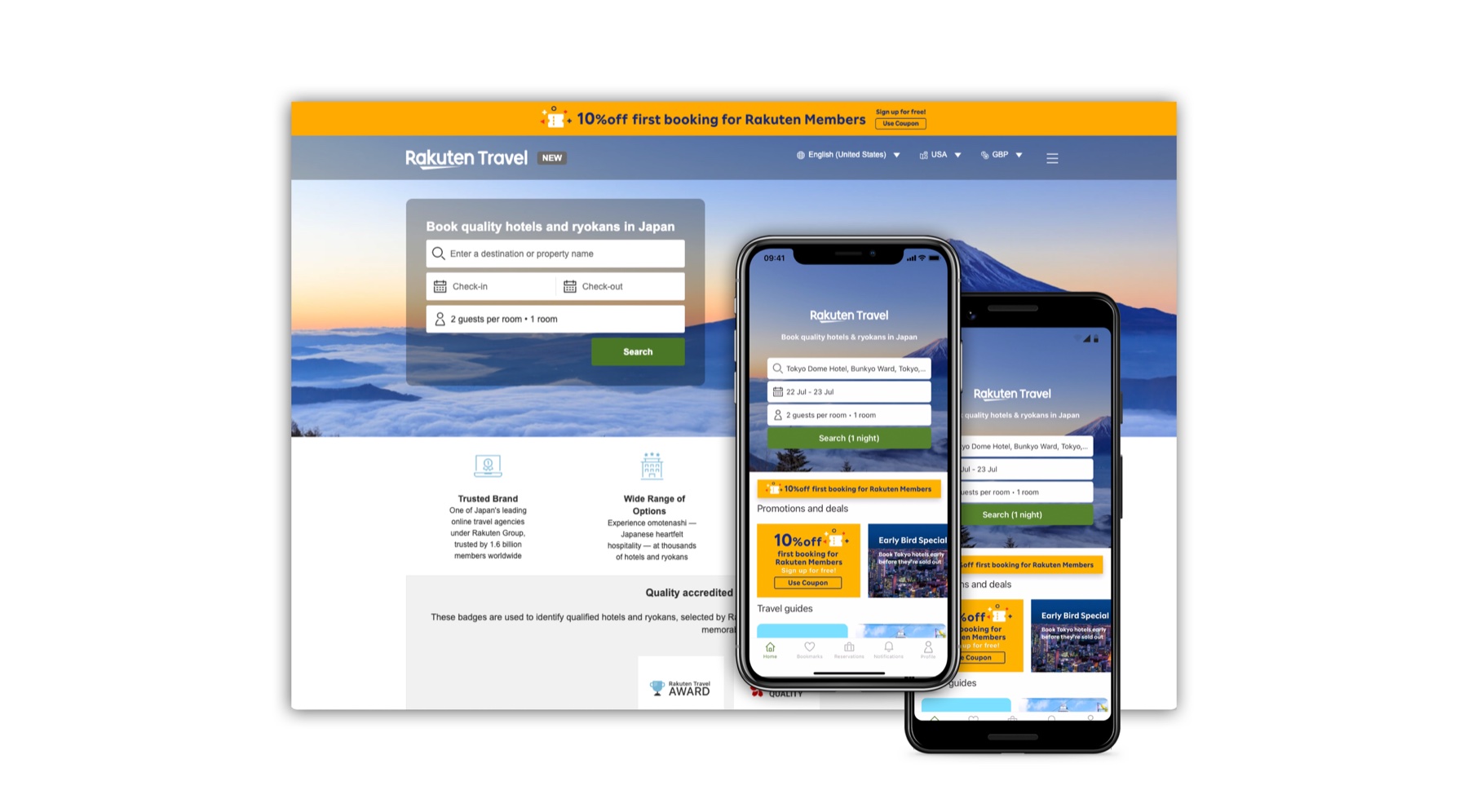
We couldn’t ship it finished. The engineering constraints meant mobile came together while web, tablet, and desktop got left behind. So we made a deliberate choice: we launched soft, mobile first, and we designed the incompleteness into the product — labeled it new, and built a feedback channel right into it so the people using it could tell us what to fix next. We didn’t pretend it was done.
And before any of it went out, it had to earn the right: task-completion studies with real users, scored, that had to clear a bar before launch was even allowed. It cleared it. Then it went to market — unfinished, mobile-only — and took 10% inbound market share in its first 30 days.
We couldn’t ship it perfect, so we shipped it honest — and built it to listen.
10%
inbound market share, first 30 days
0→1
design system, built from nothing
0→1
user research & personas, introduced
What happened next
Undone from above
I’d taken a broken team and a broken product and gotten both working. And then the organization above me undid it. A leadership fight I had no part in ended with people walking away. A reorganization was coming that would have put me under the one person I knew I couldn’t do good work for. And the company decided it didn’t want two travel products, and folded ours into the older one.
I had turned the mess into something real and watched it get reduced to less than it should have been. So I stepped away — on my own terms, with the work done. I never looked back to see how the merge turned out.
You fix an organization by trusting its people.The manager doesn’t do the work. The room does. The job is to find where each person is strong and get everything else out of their way.
The takeaway
What three years there gave me
The certainty that I can walk into a fractured design organization on a rejected product and bring both under control — from chaos and waterfall to a functioning, research-driven, Agile team that ships. That’s the confidence I left with.
But the lesson underneath it is the one that lasts, and it’s the same one running through everything else in this portfolio: I didn’t do that. The talent did. I’d spent most of my career as an individual contributor, certain the work was the thing you made with your own hands. Here I learned the harder discipline — to build the room, then trust it. That’s the shift I carried out, and it has changed how I’ve worked ever since.